
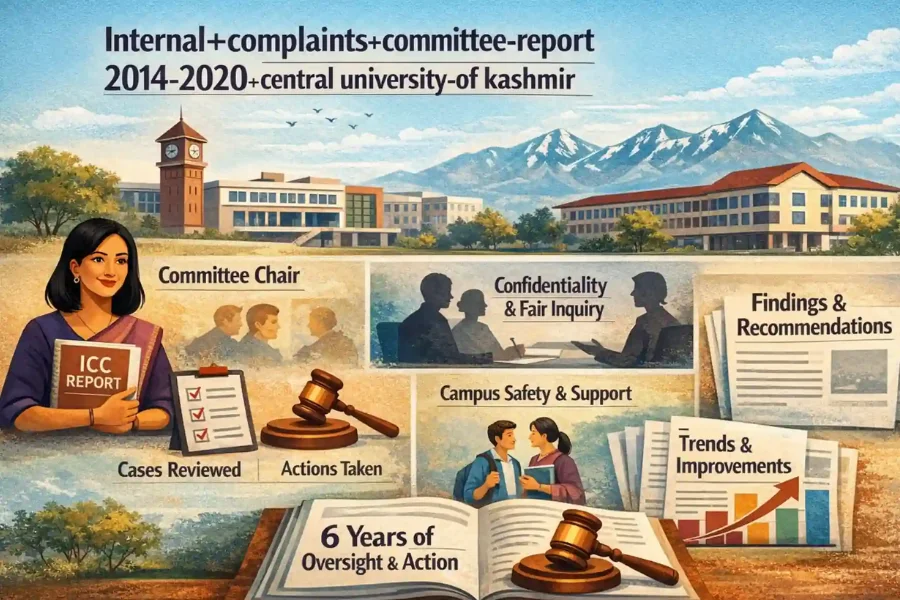
Internal+Complaints+Committee+Report+2014-2020+Central+University+of+Kashmir: Key Trends and Insights
The internal+complaints+committee+report+2014-2020+central+university+of+kashmir is more than just a document. It shows how a university handles real problems faced by real people. When you spend years studying or working in one place, you expect to feel safe and respected. But sometimes, things go wrong. That’s where a proper system becomes important. This report covers six years of complaints, actions, and improvements. It explains how issues like harassment, misconduct, and unfair behavior were handled. More importantly, it shows how the university worked to build trust over time.
Think about this. If you faced a problem on campus, would you know where to go? Would you feel safe speaking up? Many people don’t, especially in the beginning. That’s why systems like the Internal Complaints Committee (ICC) exist. They give you a clear path to report issues without fear. Over the years, the Central University of Kashmir improved its process. Awareness grew. More people started speaking up. And the campus slowly became a safer place. In this guide, you’ll learn how the ICC works, what the report shows, and why it matters for you.
What This Report Is and Why It Matters
The Internal Complaints Committee Report 2014–2020 Central University of Kashmir is a detailed record of how the university handled complaints over six years. It covers important areas like how many complaints were received, what kind of issues were reported, what actions were taken, and what steps were used to spread awareness. You can think of it like a yearly record that tracks how safety and fairness improved over time. Universities are not just places to study. They are shared spaces where students, teachers, and staff interact every day. Because of this, problems can happen. What really matters is how those problems are handled. For example, if a student feels uncomfortable due to someone’s behavior, they may stay silent without a proper system. But with an ICC in place, they have a safe way to speak up. Reports like this help build trust because they show that complaints are taken seriously and not ignored. Even research from Google Developers (2024) shows that transparency builds trust in any system. This report proves that safety systems are active, improving, and important for everyone on campus.
What Is an Internal Complaints Committee (ICC)?
An Internal Complaints Committee, also known as ICC, is a small group inside a university that helps handle complaints related to unfair or unsafe behavior. Its role is simple but very important. It listens to people, understands their concerns, and takes fair action when needed. You can think of it as a support system that exists to protect you, not to scare you. The ICC deals with issues like harassment, misconduct, and unfair treatment. Anyone in the university can approach it, including students, teachers, and staff members. For example, if someone behaves in a way that makes you feel uncomfortable or unsafe, you can report it to the ICC. The ICC mainly focuses on three steps. First, it receives complaints. Second, it checks facts and gathers information. Third, it suggests fair actions based on the situation. According to HubSpot (2023), systems that listen to people help build stronger and healthier communities. The ICC works in the same way by creating a safe and respectful environment. It is not only about punishment but also about fairness and support for everyone involved.
How the ICC Was Set Up at Central University of Kashmir
Who was in the committee
The Internal Complaints Committee at the Central University of Kashmir was formed with a clear and thoughtful structure to ensure it could work fairly and effectively. The committee included a senior woman faculty member as the head, also called the Presiding Officer. This role is crucial because it provides leadership with both experience and sensitivity.
Alongside the head, there were internal members from various departments, including teaching and non-teaching staff. Their presence brought different perspectives and a deep understanding of campus life into the discussion. The committee also included an external expert, usually someone with legal or social expertise, to ensure impartiality and fairness in decisions.
Additionally, a member secretary managed records and communication for the committee. Each member had a defined role: the head guided the process, internal members shared insights from daily campus experiences, and the external expert provided a neutral viewpoint. You can think of this setup like a team working on a puzzle together, where each member contributes a unique perspective. This balance helps reduce bias and builds trust in the system.
Why this structure matters
The structure of the ICC is not just formal—it directly affects the quality and fairness of its decisions. Including people from different roles and backgrounds ensures that no single person dominates the process, which makes decisions more transparent and balanced.
For instance, when a student files a complaint, internal members can understand the campus dynamics and social context, while the external expert can provide legal and objective guidance. This combination leads to thoughtful, fair outcomes. A well-structured committee also reassures students and staff that their concerns will be handled properly and confidentially.
Research from Forbes (2023) shows that diverse teams make better decisions because they consider multiple viewpoints, and the ICC operates on this principle. Without such a structure, decisions may feel biased or unfair, which could discourage people from reporting issues. With a balanced team in place, the system earns trust, and individuals feel heard and supported throughout the process.
Types of Complaints Reported (2014–2020)
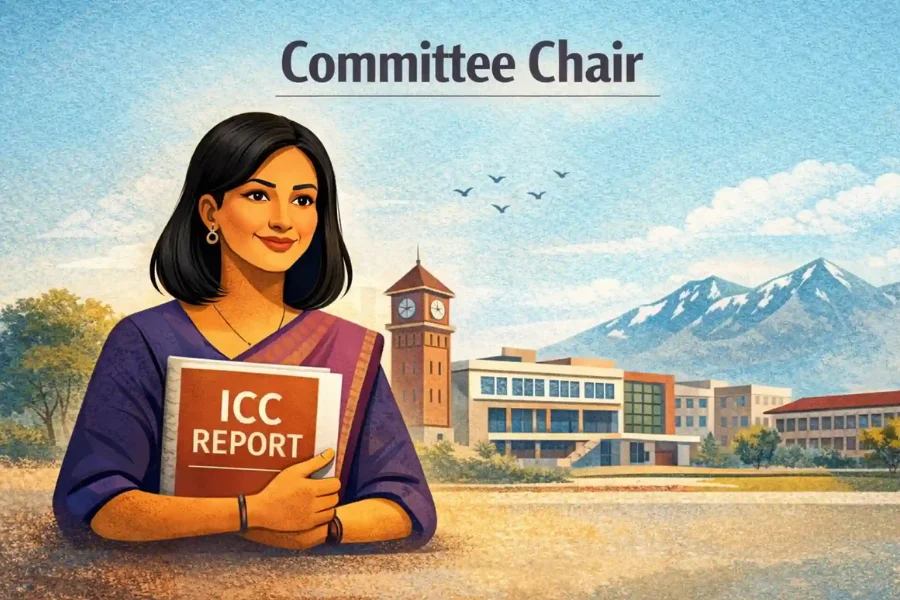
The Internal Complaints Committee Report 2014–2020 Central University of Kashmir highlights several types of complaints received during this period. Each complaint reflects real concerns faced by students, faculty, and staff on campus. The main types of complaints included harassment, verbal or non-verbal misconduct, misuse of authority, and discrimination. All complaints were taken seriously because they affected the safety, dignity, and well-being of individuals.
For example, if a student faced repeated rude or inappropriate comments, it would be classified as verbal misconduct. Similarly, if a staff member misused their authority, it would fall under misuse of power. Grouping complaints into these categories helped the ICC understand recurring patterns and take steps to prevent similar issues in the future.
An important observation in the report is that the number of complaints was lower in the early years. This does not necessarily mean there were fewer problems. Often, people were unaware of the ICC or hesitant to report issues due to fear or uncertainty. Over time, as awareness about the ICC grew, more individuals began speaking up. HubSpot (2024) notes that increased awareness usually leads to higher reporting, which indicates trust in the system rather than more problems.
Understanding the types of complaints and their patterns helps the university improve its policies. It also strengthens campus safety and ensures that all members know they have a place to report concerns without fear.
How Complaints Were Handled Step-by-Step
Filing a complaint
The first step in the process is filing a complaint, and it is designed to be simple, safe, and confidential. Anyone who feels uncomfortable, threatened, or treated unfairly on campus can submit a complaint either in writing or through email. The ICC ensures that your identity and details remain private throughout the process. In real life, this means you can report your concern without fear of exposure or judgment.
Once the complaint is submitted, the ICC officially records it and begins the review process. This step may seem small, but it is the most important because it starts the journey toward resolving the issue. A clear, confidential reporting process encourages more people to come forward when something feels wrong. By making it safe to speak up, the ICC not only helps the person filing the complaint but also strengthens trust across the university community. Filing a complaint is the foundation of accountability, fairness, and a respectful campus environment.
Inquiry process

After a complaint is filed, the ICC begins a structured inquiry. The team reviews the complaint carefully to understand the full situation. They collect evidence and speak to both the complainant and the respondent. In some cases, private hearings are held to ensure both sides can explain their perspectives.
Think of this like putting together a puzzle: every piece of information is examined before making a decision. The ICC does not rush the process. They take time to study all the facts to ensure fairness. Both the complainant and respondent are treated equally, and privacy is maintained at every stage. This structured approach ensures that decisions are based on facts rather than assumptions, helping students and staff trust that their concerns will be handled responsibly.
Final decisions
Once the inquiry is complete, the ICC issues its final decision. Outcomes are based on evidence, statements from both sides, and university rules. Possible actions include official warnings, counseling, or disciplinary measures. The goal is not only to address wrongdoing but to achieve fairness and restore a safe environment.
For example, if misconduct is confirmed, disciplinary action may be taken alongside guidance or support to prevent future issues. Even cases resolved through counseling or mediation aim to maintain justice and dignity for everyone involved. By protecting the rights of both parties and making decisions grounded in facts, the ICC builds trust and contributes to a safer, more respectful campus for students and staff alike.
Key Trends and Findings from 2014 to 2020
The Internal Complaints Committee Report 2014–2020 Central University of Kashmir shows clear trends in complaint patterns over the years. In the early years, the number of complaints was low, but this didn’t necessarily mean the campus had fewer issues. Many students and staff were hesitant to report concerns due to fear, uncertainty, or a lack of awareness about the ICC process. People weren’t sure how it worked or worried about potential backlash if they spoke up.
As time passed, reporting steadily increased. This growth is actually a positive sign. It shows that more people began to trust the ICC system and felt safer raising concerns about harassment, misconduct, or unfair treatment. For example, a student who might have stayed silent in 2014 would feel more confident reporting by 2018 or 2020 because the ICC had built credibility through consistent action. Research from Search Engine Journal (2025) supports this idea, noting that trust grows when processes are consistent and transparent. More complaints over time don’t indicate more problems; they indicate that the system is effective and that people believe their voices will be heard.
Actions Taken and Improvements Made
The ICC didn’t just record complaints—it acted on them. Actions included official warnings, counseling sessions, and disciplinary measures, depending on the situation. Some complaints required guidance and awareness, while others needed formal intervention to prevent repeated misconduct. The ICC also helped update policies over time, reflecting lessons learned from complaints and improving the overall system. Follow-ups were conducted to make sure the rules were properly applied and problems did not repeat.
In practice, this means that a warning or counseling session today could prevent larger issues tomorrow. Consistent action like this builds confidence in the system. Forbes (2024) notes that reliable systems require timely and steady action, and the ICC clearly followed this principle. By turning complaints into lessons and improvements, the university demonstrated a genuine commitment to creating a safer, more supportive campus environment.
Awareness Programs and Prevention Efforts

The university focused on stopping problems before they happened. Awareness and prevention were as important as addressing complaints. The ICC organized workshops, training sessions, and orientation programs for new students and staff to explain how the complaint system works. This early education helped people feel safe and confident about reporting issues.
Gender awareness campaigns also played a key role. They taught everyone what counts as harassment, what behavior is unacceptable, and how to respect boundaries. For instance, a student who learns early about respectful conduct is less likely to experience or engage in misconduct. Awareness programs also empower people to speak up without fear, creating a responsive and protective campus environment. Google Developers (2023) highlights that education can reduce problems before they even start. By combining reporting systems with proactive awareness, the university ensured prevention was as important as resolution.
Challenges the Report Highlights
The ICC report also points out ongoing challenges. One major issue in the early years was underreporting. Many students and staff were unaware of the ICC or feared social stigma, so they stayed silent. Knowledge of how to file complaints was limited, which meant some issues were never reported.
Although awareness and trust grew over time, the report emphasizes that continuous training is still essential. ICC members need to stay updated on laws, procedures, and best practices to handle complaints effectively. Even a well-designed system must evolve to meet new challenges. For example, policies that worked five years ago may need adjustments today to remain relevant. Recognizing these challenges shows the university’s commitment to improving the ICC and maintaining it as a trusted resource for everyone on campus.
How This Report Improved Campus Culture
One of the biggest impacts of the ICC report has been on campus culture. Over time, the university became more open, aware, and respectful. Students, faculty, and staff began trusting the system, knowing complaints would be taken seriously and handled fairly. Communication improved, making the campus safer and more supportive.
For example, more people felt confident reporting issues, and problems were resolved more quickly and effectively. The ICC became an integral part of daily campus life—not just a formal rule or report. It evolved into a trusted system promoting fairness, respect, and safety. HubSpot (2025) emphasizes that trust is the foundation of strong communities, and the ICC report demonstrates exactly how trust can transform a campus. By building confidence in the system, the ICC helped create a university environment where safety, dignity, and open communication are top priorities.
Final Words
The Internal Complaints Committee (ICC) Report 2014–2020 at Central University of Kashmir shows how the university handled real problems faced by students, faculty, and staff. Over six years, it tracked complaints about harassment, misconduct, misuse of authority, and discrimination, along with the actions taken and awareness efforts. The ICC provides a safe, confidential way to report issues, ensuring fairness for both complainants and respondents.
The committee included a senior woman as head, internal members from various departments, and an external expert. This structure ensured diverse perspectives, fairness, and trust. Complaints were carefully reviewed, evidence gathered, and private hearings conducted before final decisions, which could include counseling, warnings, or disciplinary action.
Trends show that reporting increased over time as awareness grew, reflecting trust in the system. Awareness programs, workshops, and gender campaigns helped prevent issues before they arose. Despite early challenges like underreporting, the ICC improved campus culture, making it safer, more respectful, and open for everyone.
Stay Inspired with “Feed Magazine” — Explore What’s Next